Wednesday, December 02, 2009

Time to play catch-up and some fun news!

Well, so much has happened since I last really wrote anything here. I have almost made it completely through another quarter here at Fuller. It has been an odd term due mainly to the way it started (look here if unsure what that means). I have a little more than a week left to finish my papers and projects. I have continued to live in downtown LA and help out with the after school program at our church. I am moving up to Pasadena to be closer to Fuller in just a few weeks, so that is exciting! I found a cool spot where the community meets together for meals each night of the week.

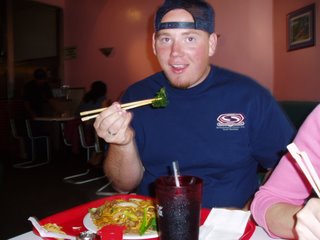
Also, on the exciting news... as per the picture just below this, I am dating this beautiful lady, Amal (pronounced *A-mel*). She is an intern at the church this year, so things will be strange once I move away. I guess I will be spending a lot more time in LA than I was planning previously (not a bad thing at all!). I'm gonna work on building a bike for Amal and then be on the lookout for some great places to hangout in the middle. Once the quarter is finished, I will be updating you all on some cool things I have been learning and writing about this quarter.

Until then...

Tuesday, November 10, 2009

Words of advice from Lesslie Newbigin

"Don't imagine," the missionary will be told, "that you are going to take God into the [country, city, people-group]. He is there already. He has been at work there long before you came on the scene and he will be there after you have gone. Your job is to learn what he is doing in the world which is already his, not to introduce him to a world from which he is absent" (Open Secret, 1995:67).

Tuesday, October 20, 2009

My Crank Arms Hate Me!

I know this sounds overly dramatic, but if you want more details of why I say this, look here.

I was riding to the library today and started through an intersection on Figueroa St. in Downtown LA and felt my crank bend (crack really). I bought this crankset four months ago, so they should be warrantied, but it is really annoying to have this happen again. It takes my bike out of commission for at least a week until the new crankset comes in.

That crack is not supposed to be there!

More detailed pic

Saturday, September 26, 2009

Yours Truly Detained, Jailed, and Deported...


...all from our ally the UK

As crazy as that sounds, it is all true. I left Wednesday from LA to go to London to participate in my practicum with Fuller Theological Seminary for the next two months. As I entered immigration in London, it went downhill quickly from there. I will try to fully capture what took place over the next 40 hours until I returned to LA.

I was told the UK was getting extremely difficult to enter, even for people who are coming for vacation, so I stated that I was coming as a student taking a semester off and was vacationing. I had proof of money in my bank account as well as additional money from my financial aid from Fuller. I provided these documents to the immigration officer. He asked if I had a place to stay and a contact number. I provided the address and name of the man I was staying with who went to the church one of the families attended. I also provided the number and name of the team leader with the organization I was going to join. In the documents I had this information on, there was also information on how difficult the border was becoming to cross for those not from the European Union. It was not to mislead the immigration people or to provide false information, but in reality to clarity the situation to prevent problems. Well... in actuality having these instructions with me really caused the immigration people to freak out.

After glancing over these instructions, the officer told me to take a seat and wait for him as he talks with his supervisor. After waiting about 15 minutes, another immigration person came to me and told me he was going to take me to get my checked luggage. We went to get it and he searched through all of my bag as well as my carry-on luggage. He then took me back to the previous waiting area. I was there until another officer came and told me he needed to take me to another area to wait until this was all sorted out. He then took me to a locked area where anyone suspected of illegally immigrating was held. In this room, there were some chairs, coffee, a tv, and some food we could eat. My belongings were taken from me and I was allowed to have a coat and my Bible. I was taken to another room to be photographed and fingerprinted. After this I was told that another immigration officer was looking over my papers and would come interview me later.

After about three hours, the aforementioned officer came to "interview" me, which was much more like an interrogation. She started off the interview with stating that she was going to ask me a series of questions and if I lied, she would know it and I would be deported. Se then asked me all sorts of questions about what I was coming for, who I was meeting in London, how I know them, how I was paying for it, how was this part of my school, etc, etc, etc... for over two hours. I gave her the information of the people living in London I was going to meet, including the team leader, Darren. I told her to call Darren, because he would back up my information I gave her. She finally left after stating that she was going to call Darren and talk with her supervisor about my case.

I waited another hour or more until she returned. I had previously told her that I had a few documents on my computer verifying that my school knew what I was doing as well as a contract between Darren any myself on my responsibilities while in London. She returned to ask me to show her this. I was taken to get my computer from the area they were holding my luggage. I showed her the documents I had described. She stated that she had spoken to Darren who had stated that he did not really know me (we haven't met, but have spoken and e-mailed each other multiple times), he had not signed a contract, I had not applied to work with the organization, I was only a tourist, and he had no knowledge of my coming to work with the organization. I was floored by this assuming that what she had said was the truth. Only later after I returned to LA did I hear the truth. Darren had spoken with her for about a half hour where he repeatedly backed up what I had said, but she kept asking Darren question after question trying to get him to state something to implicate me. He had not stated the things she told me, but for some reason chose to lie to me. I'm baffled by this and have no answer why this woman was so coercive and, dare I say, evil toward me.

I stated that I was not sure why Darren would say these things, thinking that there must be some reason that Darren was "throwing me under the bus." I begged her to please speak with her supervisor and state that I was here with completely pure intentions and really just wanted to help the people. She left and I waited another two hours or so. In my time waiting, I was able to talk with the other guys being detained there. Most of them were trying to sneak into the UK to work. There was one guy that was from Iran and had flown in from Turkey with a stolen passport that he had ditched on the plane. I perceived that he was trying to seek asylum from something he was fleeing in Iran. It was really kind of interesting to hear their stories, but really really ridiculous that I was treated in the same way as they were.

Finally at about 7 pm, the immigration officer came once again to speak with me. She stated that they were denying me entrance into the UK for not having proper documentation from Fuller, having the e-mail from Darren that was suspicious, and for Darren and my stories not coinciding. She stated that I had a return flight on the same airline the following afternoon and would be moved to another facility for the night. At that point I kind of flipped my lid a little and started yelling at her. I know that was not really cool, but felt necessary at the time.

At about 11 pm I was taken with my belongings outside the airport in an armored, gated-off vehicle for transporting "prisoners." I was not handcuffed, but was treated in a manner similarly to a criminal. We drove about 15 minutes away and arrived at the "jail." I was taken into a small room and was searched (in all I was searched over 10 times in the next 12 hours...weird). My belongings were categorized and put in a holding area. I begged them to allow me to have my Bible in the cell with me and after a careful search for a shiv or something like that, they allowed me to have it. I was then taken to another area where I could get something to drink and spoke with a medical person. He interviewed me on my physical and mental condition and then told me it was ridiculous how I was being treated for doing nothing wrong.

I was finally taken to an actual locked jail cell where there was a bunk-bed with, thankfully, no one waiting for me, a toilet and shower. I was led to this room where they left me and locked the door. I was able to fitfully sleep through the night. Each hour the guards would noisily open the door and check to see if I was still alive or something. In the morning one guard brought in some food including an apple, orange juice, milk and cereal. In the late morning, they let us out of our cells to make a phone call and get some fresh air in the "jail yard," which was in the middle of the building and consisted of a paved area about 25 feet by 25 feet. There were another 15-20 men in the yard. We mostly just stood there and talked or some smoke. We were out there for about a half hour and then were told to return to our room.

Around noon, I was told I was to be taken back to Heathrow. After a really long process and multiple more searchings, I was finally loaded up into the prisoner van with two other men. We were taken out of the jail with multiple security checks (seriously, it was so surreal that this happened. We would go though one gate to come to another where a security person would check if it was really us and then out that gate. This happened three times!). We made it to another detention area in the airport where we waited until it came time for our flights.

About an hour and half before my flight was to leave, I was transported with two security people to the correct terminal. I was then walked by these security people to the metal detectors to the front of the line. Everyone waiting was looking at me and no doubt thinking that I was some sort of a criminal. After getting cleared through airport security, they walked me to the correct gate and took me up to the desk. There I received my boarding pass and my checked bag was left for them. I was then walked up the ramp and onto the plane where the security left me, but handed my passport to the flight attendants. I had a fairly uneventful flight back to LA where I told my story to multiple people. We landed and I was handed my passport as I left the plane.

Looking back, I don't think the intention of the immigration officer who interviewed me was to ever let me into the country. With her actions toward both myself and Darren, it shows that she is extremely coercive and lies through her teeth. She challenged both my beliefs and Darren's beliefs by stating that we had both lied repeatedly and "someone who was truly a Christian wouldn't do that" in her words. It is obvious that the Enemy works through people to fight against the Lord's advance on those places the Enemy has as a stronghold. Now I am left to wonder what it next for me. I was planning on being in London for two months. If you are a praying person, please pray that I would feel direction on what to do. Also pray for my attitude. I feel very taken advantage of, coerced, deceived, and overall treated like a criminal. I have never been called a liar so many times and was most definitely verbally assaulted by the immigration officer in her interrogation.

I guess this will be funny someday and will be a good story to tell, but it's not there yet. The UK was one of the places on the top of my list to visit, but who knows if I'm "backlisted" and won't plan on going there anytime soon. So so so so so so so ridiculous!

Saturday, September 19, 2009

Old pics from the recent wildfire in the Los Angeles forest


These are from North Hollywood and makes the wildfire look like an atomic bomb went off. It was incredibly smoky in downtown LA where I live for about a week until the wind started shifting north.

Tuesday, September 08, 2009

Book Reflection - Prayer Evangelism

This book might seem like a vastly different theme from the rest of the books I have read and reflected upon this summer for my independent study. I recognize this, but also want to note the importance of integration in our lives as followers of Jesus. I believe that our lives should always be about integration - between spiritual and social actions. I have read and written vastly about ethnography, social justice and incarnational living, which are social actions, but there are deep spiritual implications in doing these also. This book is about integration between these lives also.

The author, Ed Silvoso, uses Luke 10:5,8,9 as a description of this concept of prayer evangelism. He notices to four points that Jesus used in his sending off of the disciples to the town to proclaim His message. Silvoso's four points are: (1) Speak peace upon them, (2) Fellowship with them, (3) Take care of their needs, and (4) Proclaim the good news (37). He expands on these on pages 47-48, stating,

1. Blessing opens the door to unbiased fellowship.
2. Fellowship establishes a level of trust, allowing our neighbors to share with us their felt needs.
3. Prayer addresses their felt needs.
4. When we intercede for our neighbors, the kingdom of God comes near them in a tangible way: "Say to them, 'The kingdom of God has come near to you'" (Luke 10:9)

Silvoso is quick to point out that the method Christians often use is a reversal of the order of this method. Most often, the proclamation is the first thing done. He shared a story of going door-to-door as part of a church ministry. He stated that in the (maybe) five minutes they would have at the door, the first four minutes were used to describe how Christians are different from Jehovah's Witnesses. He states that there is a different way that Jesus provided. As I was reading this today, I was struck with praying peace over people in the coffee shop I was in. I prayed over the lesbian couple, the girl swearing at her computer, the barista's, and a few other people coming and going from the shop. God could have used my simple prayers to show Himself to them. Sometimes it just takes a simple prayer like this or a statement of peace to remind people of the loving God they really want to know and belong to.

Silvoso offers 17 paradigm shifts that he recognizes the body of Christ followers need to recognize and promote in our lives and in our churches. The first one stood out to me in this period of my life. The first paradigm shift was "One Church in the City." Simply, this refers to the need for unity and healing in the broken system of Christian churches in the city. Too many churches are in competition with each other and are choosing to focus on the differences with each other instead of the common purpose of serving a loving God in reaching the lost of our cities. This personally stuck with me because of my position as being in seminary at Fuller Theological Seminary and working at a church in LA that has connections to The Masters College/Seminary. In some places in the Christian spectrum, these academic institutions are polar opposites. The have differing views on women in leadership, spiritual gifts, works of the Holy Spirit, and many other things. I would not say these things are insignificant, but they are not on the same level as Jesus and His Father's purpose. I call for us to be willing and purposeful in bridging the gaps between differing views in the church. We must be willing to recognize our differences and set them aside for the greater good of God's kingdom being spread.

Silvoso offers concluding paragraphs to two of his chapters regarding paradigm shifts. I have added them in the following section as important dreams that we, as followers of Jesus, must have. Silvoso describes how these things have been realities is some cities across the world. His prayer, mine as well, is that this would happen in cities I am in and involved in ministry in. I also hope and pray that this would happen in cities you all live in.

Picture one Church in the city, united and fully persuaded that the city can and must be reached for Christ now, mobilizing its members to conduct prayer evangelism without divisions because of identificational repentance. Imagine church services taking place all over town and public prayer being offered everywhere for everybody because pastors no longer restrict themselves to caring for the fold but are leading their parishioners to focus on the flock at large, the city. As a result, the spiritual climate over the city is being transformed into one of godliness (171).

--And--

Everybody in the Church intercedes for the lost, battling against the devil who had blinded them. They do so without fear of death because they have despised their lives unto death. Led by evangelists who equip them to witness wherever they are, by pastors who shepherd the entire city and make no distinction between saints and sinners as far as commitment and care, and by teachers who expound on the Word of the Lord for the purpose of building up the Body of Christ, the Church constitutes a living parable of a community that loves God and its neighbors with utmost intensity, and the Lord adds daily to those who are being saved! (196).

I hope this finds you well. God bless.

Wednesday, September 02, 2009

Book Reflection - Ethnography: Step by Step

This book as per the title is a study on the specifics of doing ethnographic research written by David Fetterman. In my reflection yesterday, I detailed ethnography as being an anthropological study of specific people groups. In this book, specific steps are detailed by the author on what ethnography is used for, particular methods for gathering research, tools and ethical obligations while doing ethnographic research. This book was somewhat technical, so my reflection will be rather short and detail just some of the new ideas that the author presented.

One particularly popular method of gathering research is participant observation. As is clear in the name, this approach combines involvement in individuals' lives while having some distance to gather research and collect data as an observer. Fetterman writes,

Participant observation is immersion in a culture. Ideally, the ethnographer lives and works in the community for 6 months to 1 year or more learning the language and seeing patterns of behavior over time. Long-term residence helps the researcher internalize the basic beliefs, fears, hopes, and expectations of the people under study. The simple, ritualistic behaviors of going to the market or to the well for water teach how people use their time and space and how they determine what is precious, sacred, and profane (35).

One of the important things that participant observation adds to ethnographic research is the early research that comes with insider observation. This approach lays the ground work for more formal research including interviews, questionnaires, etc. It also helps the ethnographer begin to piece together an understanding of the culture and the worldviews of the people, which is incredibly important in being able to build relationships with those of the other community.

Additionally, the use of participant observation is very useful as a first step in entering a new culture. It is very useful in finding "key informants" or "people of peace" as some people call them. These are individuals who "can provide detailed historical data, knowledge about contemporary interpersonal relationships (including conflicts), and a wealth of information about the nuances of everyday life" (48). This was a very important concept in my Community Organizing class from the Spring Quarter. We were looking for these key informants/actors as we were getting to know the needs of the community and the dreams of the residents. As a follower of Jesus, looking for people of peace is very similar. As we see in the Bible, especially in the Gospels and Acts, the disciples/apostles went out looking for people of peace who were open to the Gospel of Jesus and desired for building community.

Finally, the last concept I want to write about is one of the described types of ethnographers called advocate ethnographers. These ethnographers "allow participants to define their reality, consider their view about the ideal solution to their problems, and then take an active role in making social change happen" (135). Where ethnography can be criticized for being non-committal, this bridges the gap between research and participation. After the ethnographer gathers their research legitimately and ethically, the findings can be presented to influence a decision by the people. Wonderful! I like it!

As always, feel free to add any comments, concerns, questions. Thanks.